Tough Immigration Laws- In Mexico
MEXICO VS. UNITED STATES: MEXICAN IMMIGRATION LAWS ARE TOUGHER
Posted by FactReal on May 8, 2010
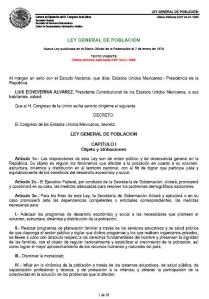
| MEXICO’S IMMIGRATION LAW:[1][3] (a.k.a. General Law on Population) |
|
• Mexico welcomes only foreigners who will be useful to Mexican society: • Foreigners with fake papers, or who enter the country under false pretenses, may be imprisoned: • Foreigners who fail to obey the rules will be fined, deported, and/or imprisoned as felons: • Under Mexican law, illegal immigration is a felony. The General Law on Population says, • Mexicans who help illegal aliens enter the country are themselves considered criminals under the law: |
| MEXICO’S CONSTITUTION:[2][4] |
|
• The Mexican constitution expressly forbids non-citizens to participate in the country’s political life. • The Mexican constitution denies fundamental property rights to foreigners. Article 27 states, “Only Mexicans by birth or naturalization and Mexican companies have the right to acquire ownership of lands, waters, and their appurtenances, or to obtain concessions for the exploitation of mines or of waters. The State may grant the same right to foreigners, provided they agree before the Ministry of Foreign Relations to consider themselves as nationals in respect to such property, and bind themselves not to invoke the protection of their governments in matters relating thereto; under penalty, in case of noncompliance with this agreement, of forfeiture of the property acquired to the Nation. Under no circumstances may foreigners acquire direct ownership of lands or waters within a zone of one hundred kilometers along the frontiers and of fifty kilometers along the shores of the country.” (Emphasis added) • The Mexican constitution guarantees that immigrants will never be treated as real Mexican citizens, even if they are legally naturalized. “In order to belong to the National Navy or the Air Force, and to discharge any office or commission, it is required to be a Mexican by birth. This same status is indispensable for captains, pilots, masters, engineers, mechanics, and in general, for all personnel of the crew of any vessel or airship protected by the Mexican merchant flag or insignia. It is also necessary to be Mexican by birth to discharge the position of captain of the port and all services of practique and airport commandant, as well as all functions of customs agent in the Republic.” • An immigrant who becomes a naturalized Mexican citizen can be stripped of his Mexican citizenship if he lives again in the country of his origin for more than five years, under Article 37. Mexican-born citizens risk no such loss. • Foreign-born, naturalized Mexican citizens may not become federal lawmakers (Article 55), cabinet secretaries (Article 91) or supreme court justices (Article 95). • The president of Mexico must be a Mexican citizen by birth AND his parents must also be Mexican-born citizens (Article 82), thus giving secondary status to Mexican-born citizens born of immigrants. • The Mexican constitution singles out “undesirable aliens.” Article 11 guarantees federal protection against “undesirable aliens resident in the country.” • The Mexican constitution provides the right of private individuals to make citizen’s arrests. • The Mexican constitution states that foreigners may be expelled for any reason and without due process. |
| SOURCES 1. ^ Mexico’s General Law on Population (Ley General de Poblacion) accessed in 2006. Website: Mexican Congress 2. ^ Mexico’s Constitution accessed in 2008. [English translation] UPDATE: [English translation] Website: Mexico’s Chamber of Deputies (lower house of Congress) under Leyes Federales y Estatales (Federal and State Laws). 3. ^ J. Michael Waller, Mexico’s Immigration Law: Let’s Try It Here at Home 4. ^ J. Michael Waller, Mexico’s Glass House: How the Mexican constitution treats foreign residents, workers and naturalized citizens 5. – Mexico’s Law of General Population [current version] 6. – Mexico’s Constitution of 1917 (Published) [current version] |